
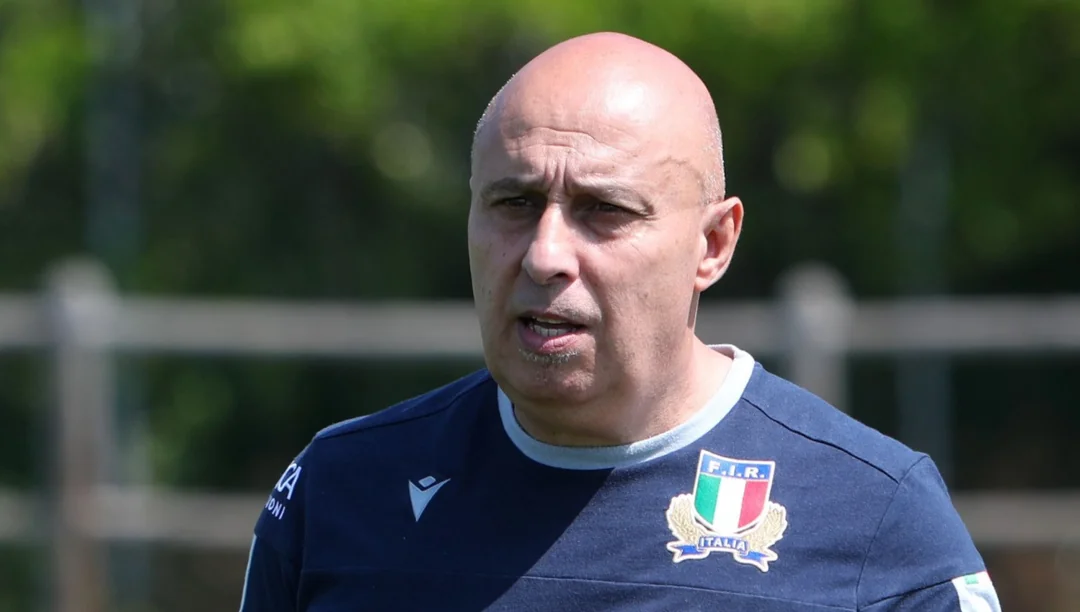
Stephen Aboud on how much of your training involves a decision, building winning and losing into sessions, and the language, data and self-awareness that make coaches more effective.
Stephen Aboud has a question for any coach planning a block of training.
“If you have 1,000 minutes to train players in, say, soccer or rugby or Gaelic football, what proportion would you give to activities with no decision-making involved, just pure technique?” he asks. “That answer is going to decide whether you’re moving closer to the reality of the game, or further from it.”
Aboud spent years with the IRFU and the Canada Sevens programme, and now works with teams, coaches and federations. In a recent Setanta College webinar, Coaching Mindset – Key Reflections for Better Practice, he set out what he has learned about coaching players and the people around them.
How much of your session involves a decision?
Stephen’s starting point is that, in team sports, every action is preceded by a decision.
“If we spend a lot of time just on technique work, without the stimulus of making a decision or the opposition, then it’s good for technique and repetition, but it’s not necessarily linked to the reality of the game,” he says. “If you spend 70% of your year working on technique activities without engaging the cognitive function, is that going to produce the type of players you want, who can anticipate?”
He is not against drills, but he wants coaches to look honestly at where the time goes.
“It’s amazing the amount of time within training, from week to week, players don’t actually play the game. They’re doing drills,” he says. “Just remember, players are not trainers. They’re called players for a reason. It doesn’t have to be the full game. It can be part of the game, for short periods, but at least you’re reinforcing what you want when it comes to Saturday.”
Anticipation, he says, only comes from repeated exposure. He compares it to a cyclist taking a sharp bend at the bottom of a hill on the way home.
“If they’ve done it a thousand times, they know when to lean in. That’s called intuition,” he says. “Someone going down that hill for the first time at night is not going to lean into the bend early, regardless of what instruction you gave them. You need time in the saddle.”
Coach the players away from the ball
Aboud separates two types of decision. Tactical decisions are made by players close to the ball, with a split second to act. Strategic decisions are made by players further away, who have more time and are thinking about what happens next.
“Most of the time, coaches focus on the players around the ball, on the tactical decision,” he says. “But in rugby, the ball in play is about 40 minutes at a high level, and the average ball in hand across all 15 players could be around 30 seconds. So for 39 and a half minutes, you’re playing without the ball. The outcome of the match is going to be decided by how useful all those players are without the ball.”
Build winning and losing into training
Aboud wants players competing in training, so that winning and losing become normal.
“Players are competing all the time, even in training, so they get used to winning and losing, whether it’s an activity or a fun game,” he says. “In every competition, only one team can win. So does that mean everyone else is a failure? You’ve got to prepare athletes and players for losing as well as for winning. Otherwise, you’re not going to become resilient.”
Training close to the game also helps players cope with pressure on match day.
“If you are training consistently close to the reality of the game, that’s more pressure than if you’re not. And if you get comfortable with that, the distance between your preparation and your testing is getting closer,” he says. “If that gap is too big, you’re going to have self-doubt, and if you have self-doubt before you’ve begun, you’ve got a problem.”
Change the language of review
Aboud has replaced “good”, “bad” and “perfect” with one word when he reviews players, programmes and sessions: effective.
“It’s very effective, it could be more effective. That conjures up a whole different conversation,” he says. “Effectiveness gives us the room to actually move forward, whereas bad or good is a label that can create pressure.”
He has stopped using perfection as a goal altogether.
“If you do reach a level you believe is perfect, what’s the next level? More perfect?” he says. “And if you’re setting it as a goal and you know that you can’t reach it, then it’s not going to be very motivational.”
Know what motivates each player
Aboud urges coaches to find out what drives each player. Some are motivated by recognition, selection and medals, others by their own standards or by the people around them.
“Even though we coach a team, we’re still coaching individuals,” he says. “Getting to know that individual, what motivates them, what their preferences are, can go a long way.”
He also warns that fear of selection stops players from playing what is in front of them.
“Players will not take risks if they’re afraid of their own position or selection,” he says.
Practise staying in control
Under pressure, Aboud says, people stop behaving the way they normally see themselves and react on instinct. Recognising that is a skill coaches have to practise.
“It’s like kicking with your left foot if you’re right-footed. You’ve got to apply it, practise it, when you’re losing it,” he says. “You can’t just learn it theoretically. If you understand it, you can put a hold on it and pull yourself back.”
Advice for younger coaches
Asked by a young coach how to show wisdom to players older than her, Aboud’s answer was to focus on being effective, and to ask for feedback.
“After we do things, we would always end up having a coffee, and invariably the first question is, ‘How do you think that went?'” he says. “No one has the right to always have the right answer, which is why my first reaction to most questions is, ‘I don’t know. I need to think about it, and then I’ll form an opinion.'”
He also encourages coaches to write down their own philosophy: how they see the game and how they go about coaching it.
“I guarantee you how you answer that now will not be the same as how you answer it in a year’s time, or five years’ time,” he says. “It’s a continuous journey, but it’s yours.”
Watch the full webinar
The full webinar ‘Coaching Mindset – Key Reflections for Better Practice’ is available at www.setantacollege.com/webinars.
